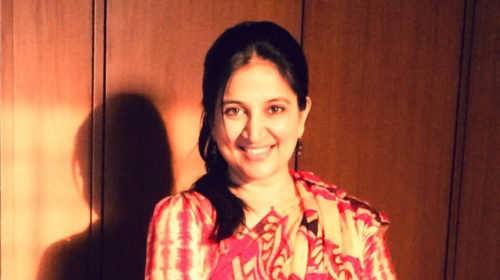
At BrilliantRead Media, we bring inspiring stories and meaningful insights from changemakers across India and beyond. As part of this endeavour, we invited Dr. Shambhavi Seth, Child Development Paediatrician and Founder of Bright Beginnings CDC, for an exclusive interview. Dr. Shambhavi works closely with children with neurodevelopmental disorders, focusing on early identification, comprehensive assessment, intervention, and long-term developmental care.
In this insightful conversation, she shares her perspective on the evolving field of developmental paediatrics in India, recognising early developmental red flags, empowering families, and the importance of multidisciplinary care and accessible developmental services. Let’s learn more about her journey, philosophy, and valuable insights into child development.
Excerpts from our exclusive interview with Dr. Shambhavi:
Developmental paediatrics in India has evolved significantly over the past decade. From your experience, what are the most important changes you have witnessed in the way neurodevelopmental conditions are understood, diagnosed, and managed?
Over the last decade, I think the most significant change in developmental pediatrics in India has been awareness. Parents, teachers, and even primary-care professionals are much more aware of developmental concerns today. Families are recognising delays earlier and, importantly, are more willing to seek assessment and intervention rather than simply waiting for the child to “catch up.”
The post-COVID period brought another noticeable change. In my own clinical practice, we saw a considerable increase in young children presenting with concerns related to language, communication, and social interaction. The pandemic altered the developmental environment of young children considerably; there was reduced peer interaction and outdoor play, disruption of preschool experiences, and, for many children, substantially greater dependence on screens.
Screen exposure, particularly in very young children, has consequently become an important part of developmental history-taking. Screens themselves should not be viewed as the sole explanation for developmental difficulties, but excessive screen use can displace the face-to-face interaction, reciprocal play, movement, and shared experiences through which young children learn communication and social skills.
We are also identifying autism much more frequently. The latest CDC surveillance data from the United States reported that approximately 1 in 31 children up to 8 years of age were identified with autism in the communities studied. While these figures cannot be directly extrapolated to India, in clinical practice here too, we are certainly seeing many more children being brought for evaluation for autism and other neurodevelopmental concerns. Part of this increase reflects better awareness, broader recognition, and earlier identification.
Another major positive change has been access to intervention. Developmental services that were once available mainly in larger cities and specialised centres have become more accessible. The pandemic accelerated the use of teleconsultation, online parent guidance, and hybrid intervention models. This has been particularly valuable for families who live in areas where trained developmental professionals and therapists are not readily available.
Early identification can profoundly influence a child’s developmental journey. What developmental red flags should parents, paediatricians, and educators be particularly attentive to, and when should they seek professional evaluation?
The first three years of life are extremely important for a child’s development, and parents are often the first to notice when something does not seem quite right. I always tell parents that they do not need to know developmental terminology; they simply need to observe how their child communicates, connects, plays, moves, and learns.
Some early signs that should prompt attention include a baby who has very limited eye contact or social smiling, does not respond consistently to their name, or shows little interest in interacting with people. As the child grows, we look for gestures such as pointing, waving, and showing things to parents. Not pointing to share interest, limited use of gestures, or seeming more interested in objects than in interacting with people can be important early social-communication signals.
Language is another area parents can easily observe. A child who is not babbling or using gestures by around 12 months, has no meaningful words by around 16 months, or is not beginning to combine words meaningfully by around two years should be evaluated rather than simply being labelled a “late talker.”
Play also tells us a great deal about development. By the second year, children should increasingly imitate adults and begin simple pretend play, for example, pretending to feed a doll or using a toy phone. Very repetitive play, limited imitation, or little interest in sharing play with another person may warrant closer assessment.
Motor development should not be overlooked. Significant delay in sitting, standing, or walking, persistent asymmetry in the use of the two sides of the body, unusual stiffness or floppiness, or difficulty using the hands appropriately for age should be discussed with a professional.
Most importantly, loss of any previously acquired skill, whether words, gestures, social interaction, or motor abilities, is a red flag at any age and should never be ignored.
I would encourage parents not to panic over a single milestone or compare their child constantly with other children. Development naturally has some variation. However, if several developmental skills are delayed, a child is not progressing over time, parents repeatedly feel that communication or interaction is different, or there is any loss of previously acquired skills, it is better to seek a developmental assessment early.
The message I would like families to remember is simple: “When in doubt, check it out.” Early assessment does not necessarily mean giving a child a diagnosis; it gives us an opportunity to understand the child’s developmental profile and provide support at the time when it can make the greatest difference.
A diagnosis can often be overwhelming for parents. How can developmental paediatricians help families move beyond fear or uncertainty and become confident, informed partners in their child’s developmental journey?
A developmental paediatrician has a unique role because they are first trained as a paediatrician, with an understanding of the child’s overall health, growth, and medical needs, and then have specialised expertise in child development and neurodevelopmental conditions. This allows us to look at the child as a whole and bridge the gap between health, development, behaviour, and learning.
Importantly, our role does not end with assessment or diagnosis. In fact, I often tell families that a diagnosis is the beginning of the journey, not the end of it.
Once we understand a child’s developmental profile, the next important step is to formulate an individualised intervention plan: which areas need to be prioritised, which therapies are actually required, what parents can work upon at home, and what support the child may need at school.
Another very important aspect is regular developmental follow-up. Development is dynamic, and a child’s needs change with age. We need to periodically assess whether the child is making the expected gains in communication, social skills, behaviour, learning, and independence.
If progress is slower than expected, we need to understand why: is the intervention addressing the right developmental goals, does the therapy plan need modification, are there associated medical or behavioural concerns, or have the child’s needs simply changed?
Therefore, I see the developmental paediatrician not merely as a professional who labels or diagnoses a condition, but as someone who guides and coordinates the child’s developmental journey over time, working alongside the family, therapists, and school to help the child achieve the best possible functional outcomes.
Developmental care often involves paediatricians, therapists, psychologists, educators, and parents working together. How important is a multidisciplinary, family-centred approach, and how does it influence outcomes for children?
Over the years, we have increasingly understood that children with developmental needs benefit from a multidisciplinary approach. Depending upon the individual child, the team may include a developmental pediatrician, developmental therapist, speech and language therapist, occupational therapist, psychologist, special educator, and other professionals.
However, I believe that simply having multiple professionals involved is not enough. What matters much more is how well these professionals communicate and coordinate with one another.
And at the centre of this team must always be the child and the family.
The child’s primary caregivers should, in fact, be the first people we involve and empower. A young child spends only a few hours each week with professionals but spends the majority of their waking hours with the family. More importantly, the emotional connection, security, and naturally occurring interactions that a child shares with parents and caregivers cannot be replicated within a therapy room.
Therefore, mentoring, counselling, and training families to understand how to engage with their child and support development during everyday routines is becoming an increasingly important part of developmental intervention.
This is also supported by growing evidence around parent-mediated and caregiver-implemented interventions, particularly in early childhood. When families understand the developmental goals and are able to reinforce them naturally through play, communication, and daily routines, professional therapy and family involvement can complement each other and potentially produce more meaningful and generalisable gains.
The conversation is increasingly shifting from simply diagnosing a child to empowering the child and family. What does this shift mean in practice, and why is it so important?
For me, this shift means looking beyond a diagnosis and focusing on the child’s abilities, needs, strengths, and quality of life.
A diagnosis can help us understand what a child may need, but it should not define the child. The focus should be on identifying meaningful developmental goals and helping the child become as independent and confident as possible.
Empowering families is equally important. Parents need to understand what their child is experiencing, why certain interventions are recommended, and how they can support development within everyday activities.
When parents become confident partners rather than passive recipients of advice, intervention becomes a part of the child’s everyday life rather than something that happens only inside a therapy room.
Ultimately, developmental care should be about helping children participate meaningfully in family life, education, relationships, and society.
Looking ahead, what is your vision for the future of developmental paediatrics in India? What changes are needed to make early identification, intervention, and long-term support more accessible to every child and family who needs it?
I think the next major step for developmental care in India has to go beyond diagnosis and therapy. We need to build a continuum of support across the lifespan, and this cannot be achieved by healthcare professionals alone. It requires coordinated participation from all stakeholders: the government and policymakers, healthcare and developmental professionals, families, educational institutions, non-government organisations, and the wider community.
One of our biggest challenges continues to be accessibility. Developmental services remain concentrated largely in urban centres, while families in smaller cities and rural areas often have limited access to trained professionals and structured intervention programmes. We need to develop more community-based services, strengthen training at the primary healthcare level, and use technology and hybrid models to take expertise beyond metropolitan centres.
The second major area is financial accessibility. Developmental intervention is often prolonged and can place a considerable financial burden on families. Insurance coverage for developmental assessments and intervention services remains limited. Greater recognition and coverage of these services through insurance and public health schemes would make an enormous difference to families.
But our responsibility cannot stop with early childhood. We need to create appropriate educational and safe living environments across different stages of life. Some children will thrive within inclusive mainstream education, while others may require specialised curricula or special-school environments.
As they grow older, we need far greater availability of pre-vocational and vocational training, supported employment, adolescent and adult programmes, respite services, assisted or supported living facilities, and, where required, safe long-term residential options.
One of the most difficult questions parents ask me is, “What will happen to my child when we are no longer there?” Even after so many years of working in this field, it remains one of the hardest questions to answer.
And perhaps that question should guide our future policies. Our goal as a society cannot only be to help a three-year-old communicate better or help a six-year-old enter school. We must also think about what happens when that child is 16, 25, 40, or 60 years old.
Creating that ecosystem of education, healthcare, livelihood, social participation, supported independence, and long-term care is something all stakeholders need to work towards together.
The true measure of an inclusive society is not only how early we identify a child’s needs, but how consistently we support that individual and their family throughout life.
At BrilliantRead, we don’t just share startup stories; we bring you journeys that challenge perspectives, spark ideas, and fuel ambition. Every story we feature is carefully chosen to add real value, inspire action, and ignite possibility within our growing community of entrepreneurs and dreamers.
If you have a powerful story, one that can inspire, educate, or create impact, we want to hear from you.